
Home energy systems · 6 min read
Whole-home surge protection: what it can protect and what it cannot fix
A surge protective device limits transient events within its design. It does not provide outage power or replace diagnosis of flickering lights, repeated trips or damaged wiring.
YKCA Journal · Sources reviewed October 3, 2026
Explore the guide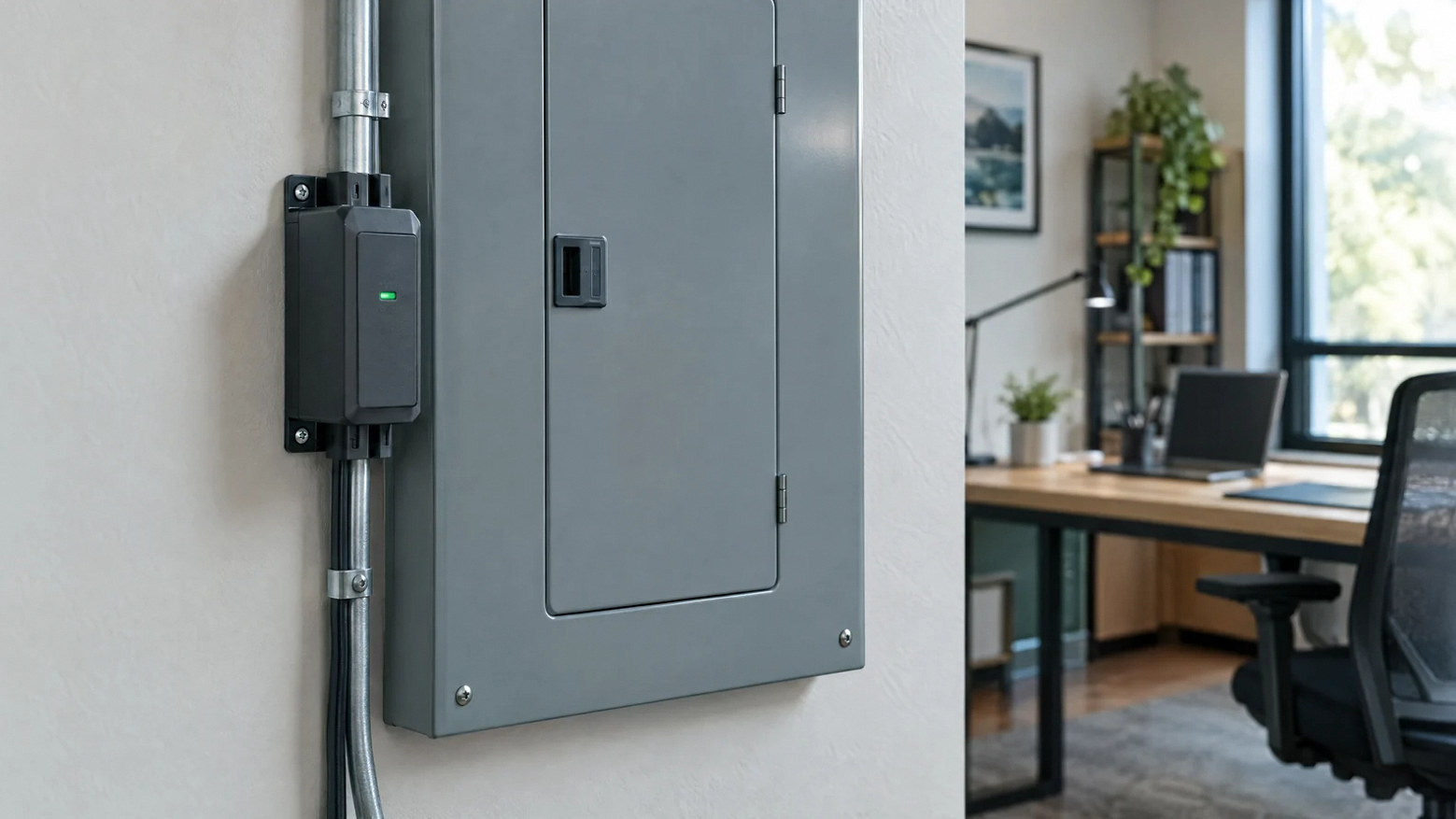
Home energy systems: browse all five guides ↗
The key decision
A surge protective device limits transient events within its design. It does not provide outage power or replace diagnosis of flickering lights, repeated trips or damaged wiring.
Separate protection from the repair question
A whole-home surge protective device can be part of protecting electrical equipment from transient voltage events. It should not be sold as a universal cure for flickering lights, tripping breakers or an unreliable supply. If those symptoms are why you called, ask for diagnosis first and compare surge protection as a separate scope.
This distinction matters because a protection product can be useful while failing to address the problem the owner actually experiences. A refrigerator losing power during an outage needs a different planning discussion from equipment exposed to a surge. A light that changes brightness when an appliance starts needs investigation rather than an assumption that a transient event is responsible. Begin with the symptom, then identify which protective or repair task follows from the findings.
Understand the job of each product
A surge protective device, or SPD, is designed for transient events under its specified ratings and installation conditions. A power strip may simply provide additional outlets unless it is identified as surge protection. A battery backup or uninterruptible power supply addresses continuity for selected loads within its own limits. These categories should not be blended into one promise of protected power.
Eaton’s explanations describe surge protection and the role of coordinated protection at different points in a system. That supports reviewing a complete arrangement rather than assuming the largest printed number guarantees the best result. The selected device, its supported location and installation instructions matter. Ask the contractor to explain the recommended model and role in plain language, including what existing point-of-use equipment should be reviewed.
Source: Eaton: Surge Protection FAQ · Eaton: Surge Protection Explained · Tesla: What Can Powerwall Back Up
A panel device does not create outage energy
If the utility stops delivering electricity, an SPD is not a stored-energy source. It cannot keep the refrigerator, router or lights operating by itself. Backup planning needs selected loads, output capability, stored energy or another supported supply, and a defined connection arrangement. A surge-protection quote should not imply that those tasks are included.
A point-of-use UPS may support particular connected equipment temporarily, but that also has load and runtime limits. A home battery system can provide a wider designed backup arrangement. Decide whether your priority is limiting transient exposure, maintaining selected equipment through an interruption or both. Treat each goal explicitly. A device can be valuable without solving a different problem, and a clear scope should let the homeowner see that distinction before purchase.
Source: Eaton: Surge Protection FAQ · Eaton: Surge Protection Explained · Tesla: What Can Powerwall Back Up
Flickering and trips need their own evidence
Describe where the symptom occurs, when it began and what else operates at the same time. Is one lamp affected, a room, several circuits or the whole house? Has an appliance or construction change preceded it? Are there abnormal odors, visible damage or a loss of power? This information helps the electrician plan the investigation without the owner opening energized equipment.
Do not assume that every symptom has the same cause because it appeared after a storm or utility event. A protection recommendation should not replace findings about circuit condition, equipment compatibility or supply behavior. If there are immediate hazards such as smoke or arcing, use the appropriate urgent response. A device installation can wait while the actual hazard is addressed. Product shopping is not a substitute for electrical service when the home is behaving abnormally.
Review the device and its installation together
The contractor should select a supported device for the actual electrical system and location, then follow its installation requirements. Ask which equipment is included, how the installation interacts with the panel and what approval is required for that project. The homeowner should not choose connections or breaker arrangements from a generic internet diagram.
Also ask about status indication and replacement instructions. Protection is not something to install once and forget without understanding the product’s indicator. Different models communicate their condition differently. Keep the manual, model and installation record accessible. After an indicator change or a significant event, follow the manufacturer’s review or replacement guidance rather than assuming the device remains effective because household power still works.
An illustrative protection-and-diagnosis scenario
Imagine a household that notices kitchen lights flickering when another appliance starts. The owner also wants to protect electronic equipment after a recent utility interruption. The electrician treats the flicker as a diagnostic task and evaluates a surge-protection installation as a separate preventive project. The owner receives separate findings and scopes rather than one vague promise that the new device will fix everything.
If the diagnosis identifies work unrelated to surge protection, the owner can review that repair on its own merits. If a suitable SPD is proposed, the handover explains its role and indicator. This is an illustrative scenario, not a customer case or a claim about the cause of any particular flicker. Its lesson is that protection and fault correction should have distinct reasons, verification and completion records.
Connected-equipment coverage is a contract to read
A manufacturer’s stated equipment coverage is not the same as a guarantee that every damaged appliance will be replaced. Terms can include exclusions, eligible equipment, required installation, documentation and claim procedures. Review the exact product’s current terms instead of treating a headline coverage amount as insurance or as a specification of electrical protection.
Keep product purchase and installation records if coverage matters to the decision. Ask who supplies the device and who handles a claim or service question. Do not assume a contractor’s labor warranty and a manufacturer’s connected-equipment coverage are identical. Also avoid a promise of total lightning protection. A property with a broader exposure concern may require another design discussion, and no SPD should be marketed as protection against every possible event.
Make the handover useful after the installation
The completion record should identify the installed device, its location, the approved installation and any separate diagnostic findings. Ask the contractor to explain the status indicator and when to request service. A photograph of an accessible indicator can help the owner recognize a later change without opening the panel. The product manual should remain with the home’s electrical records.
For Whole-Home Surge Protection planning, say whether you are seeking prevention or reporting a symptom. List existing point-of-use protection and important equipment if relevant. A useful proposal will explain the selected protection arrangement, limitations, permit responsibilities and warranty boundaries. If a fault remains unresolved, that should be stated clearly. The outcome is informed protection with a maintainable record, not a claim that one device makes every future electrical problem disappear.
Put it into practice
A decision table to keep handy
| Situation | Decision to resolve | Evidence to request |
|---|---|---|
| Prevent transient equipment exposure | Select supported surge protection | Exact model, ratings and installation instructions |
| Need power during an outage | Plan backup separately | Load and runtime design |
| Lights flicker or breakers trip | Diagnose before assuming a surge | Symptom history and service findings |
| Protection indicator changes | Follow product review/replacement guidance | Manual and installation record |
Bring this to the conversation
Your next-step checklist
Common questions
Will a whole-home surge protector keep power on in an outage?
No. It is not a backup-energy source. Continuity requires a suitable battery, UPS or another separately designed supply for the selected loads.
Will it fix flickering lights?
Do not assume so. Flickering needs diagnosis of the actual installation and equipment. Surge protection should not replace investigation or be promised as a cure without findings.
Does it guarantee against all lightning damage?
No. Device ratings, installation and exposure matter, and a broader protection strategy may be relevant. Review the actual product limitations instead of treating it as an absolute guarantee.
The questions behind this guide
Problems people are trying to solve.
These public discussions illustrate reader concerns. They are not technical instructions, local survey results or evidence of work performed by YKCA.
- Do I need a surge protector?
A homeowner with flickering lights and circuit problems is told a panel surge protector may fix the symptoms.
Check the original guidance
Sources & review date
Primary guidance and available source excerpts reviewed October 3, 2026. Requirements and program terms can change; verify the current instructions for your property and project before committing to work.
Continue with the next decision
Related guides
Ready to discuss work at your property?
Discuss this service with YKCA ↗