
Service & emergency calls · 7 min read
Burning odor or buzzing at electrical equipment: respond before researching the cause
Treat electrical burning odor and abnormal buzzing as response and diagnosis questions, with clear emergency boundaries and repair records.
YKCA Journal · Sources reviewed October 3, 2026
Explore the guide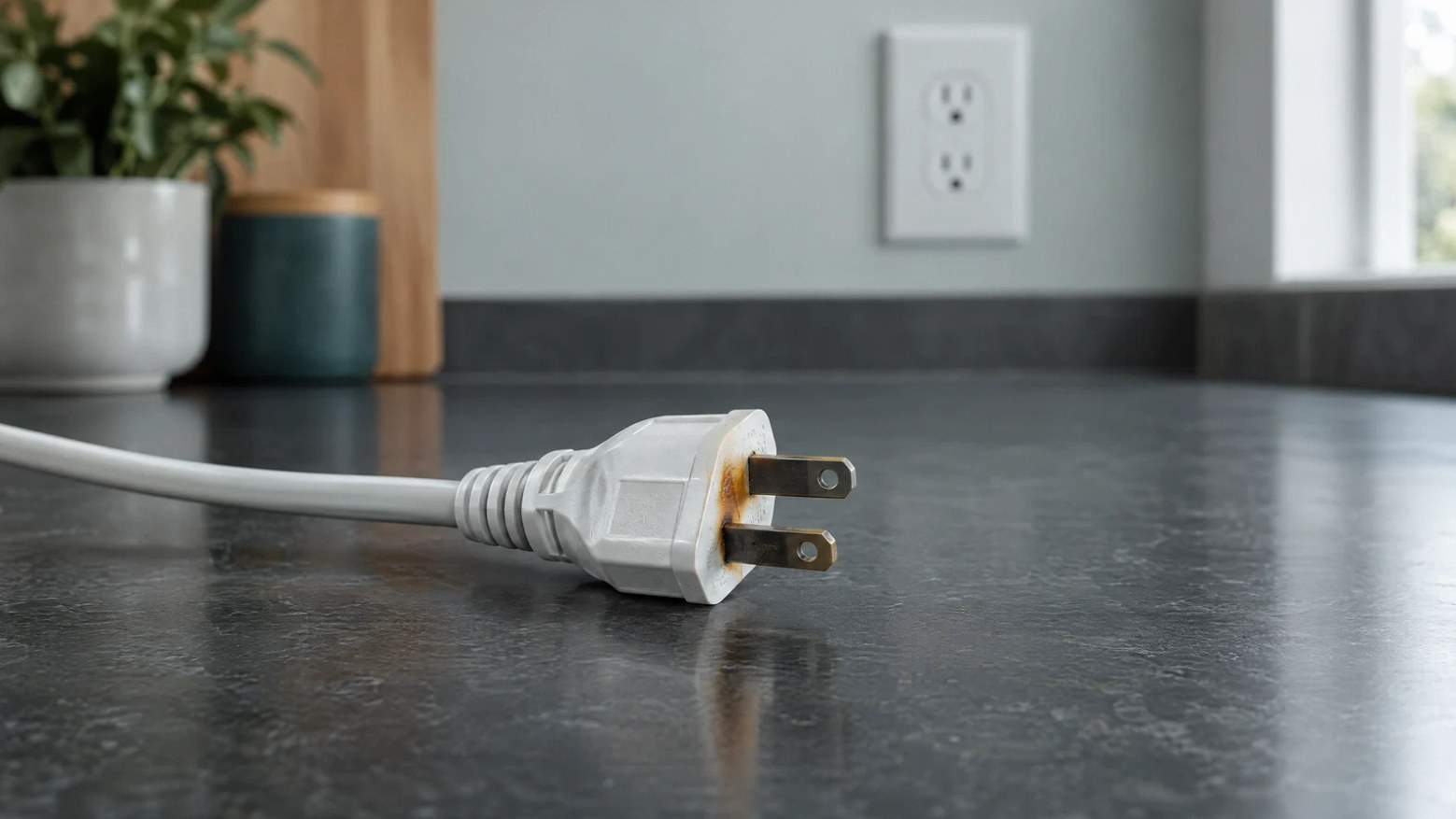
Service & emergency calls: browse all five guides ↗
The key decision
A persistent burning odor, smoke, visible arcing, or a new abnormal sound accompanied by heat or damage at electrical equipment requires prompt action. Stop using the suspect equipment. If you suspect an active fire or another immediate emergency, leave the area and call emergency services. Do not wait for a scheduled electrician while an active emergency develops, and do not remove covers to locate the source.
Stop using the suspect equipment
For a suspected electrical problem without an active emergency, arrange urgent professional evaluation and describe all warning signs. NFPA lists burning or rubbery odor, warm or discolored outlets, sparks, and recurring electrical problems as reasons to contact a qualified electrician or landlord. A remote answer cannot establish that it is safe to sleep beside an unexplained persistent odor. The first task is the response to the condition; comparing replacement devices comes later.
Source: NFPA Electrical Safety Checklist
A smell is a warning, not a precise component diagnosis
The source may be a plug, cord, appliance, receptacle, connection, fixture, or another nearby material. The location where you notice an odor does not prove the source is directly behind that wall plate. Likewise, a new buzzing or sizzling sound needs context and assessment; describing it as normal without identifying the equipment is a weak conclusion.
Tell the responding professional when the symptom began, where it is strongest from ordinary safe observation, what equipment was being used, and whether there are visible marks or recurring interruptions. Do not touch equipment to test its temperature or move plugs to recreate the odor. If you have already seen damage, report it and stop further investigation. The electrician needs the original observations, not an altered arrangement created by repeated experiments with the suspect equipment.
Know the boundary between an electrician call and an emergency call
An electrician diagnoses and repairs the electrical system. Emergency responders address immediate threats such as suspected fire, smoke, or active hazardous conditions. A maintenance request or a contractor's arrival estimate does not replace emergency response when the condition warrants it. If circumstances worsen while you wait, update the responders using the new facts rather than relying on the initial appointment category.
Avoid trying to operate equipment near the suspected hazard. Where safe isolation can be arranged, it belongs within the instructions of the appropriate responding professional. The homeowner should not enter a damaged or smoky area to obtain labels, photograph wiring, or locate the correct breaker. Unknown circuit labeling is a useful fact to report; it is not a reason to start opening equipment. Keep people away from the area and prioritize a safe location from which to make the call.
What to send with the service request
A concise report is more useful than a guessed diagnosis. State burning odor at bedroom outlet since this afternoon, for example, and add whether smoke, arcing, interruption, or visible damage is present. Include the address and access arrangement through the normal service process, and tell the dispatcher about vulnerable occupants or essential equipment. Do not describe it merely as an outlet upgrade if you are actually reporting an active warning sign.
A photograph taken earlier from a safe position can help identify the equipment, but do not approach an active hazard for a close-up. For tenants, notify the landlord or maintenance contact and preserve the report. If management has changed the panel labels or prior repairs are relevant, mention that history. For a shared building, clarify whether other units or common areas have symptoms so the responsible people can coordinate access appropriately. Do not investigate another unit or a common electrical room yourself.
An illustrative rental maintenance event
Imagine a tenant noticing a persistent burning plastic odor near a receptacle used by a lamp. The tenant submits a maintenance request, but the symptom becomes stronger while waiting. The useful response is to report the change and act on any immediate emergency indicators, rather than asking online whether the original request guarantees the room is safe overnight.
This is an illustrative scenario, not a diagnosis or an actual YKCA service call. The eventual finding may involve the receptacle, connected equipment, or another source. The tenant should receive a clear record of what was evaluated, what was repaired or taken out of service, and what remains restricted. If the source was not established, the report should not present a cosmetic device replacement as proof that the unexplained odor has been resolved. The distinction protects both the occupant's understanding and the accuracy of the maintenance record.
A repair should address damage and cause
Replacing a discolored faceplate alone does not explain why the equipment became discolored. Replacing a receptacle may be part of an appropriate repair, but the electrician should evaluate the associated wiring, connected equipment, and damage within the actual scope. Ask what was found and why the proposed work corrects that condition. If more extensive damage or a different problem is identified, request a separate explanation and authorization for the additional work.
Do not insist on the smallest visible replacement merely to keep the service call short. Also do not assume one damaged outlet proves the entire house needs rewiring. The response should follow observed findings. A defined immediate repair may be followed by a broader assessment when there is a reason for it. Ask the professional to distinguish urgent correction, recommended follow-up, and optional improvements. That structure helps you act promptly without turning an emergency visit into an undefined renovation agreement.
After an urgent repair, agree on how continuing symptoms should be reported. The household should know the contact for follow-up and which warning signs require a fresh emergency response. If one appliance was identified as suspect, mark it out of use so another occupant does not reconnect it accidentally. Keep any replaced parts only if the attending professional says that is appropriate and safe; photographs and the written finding may be the better record. The purpose of documentation is to preserve the diagnosis and restrictions, not to encourage further handling of damaged equipment. Make the handover understandable to everyone who uses that room.
After the visit: clarify use and unresolved concerns
Before normal use resumes, ask which equipment and areas were evaluated, what was repaired, and whether any appliance, cord, or circuit must remain out of service. Keep those restrictions visible for other occupants. If an odor remains, report it instead of assuming it is residual; the professional needs to determine what it means in the context of the completed work.
Common mistakes include waiting because no breaker tripped, touching a suspect device to confirm heat, moving an appliance to another outlet as a test, and replacing cosmetic parts before diagnosing the warning sign. Discuss a nonactive repair assessment through the outlet and switch service and describe urgent symptoms clearly when arranging service. The completion record should connect the finding to the repair. Power being available is only one observation; the cause and affected equipment still need an appropriate professional explanation.
Put it into practice
A decision table to keep handy
| Situation | What to clarify | Planning implication |
|---|---|---|
| Persistent odor with smoke or arcing | Immediate emergency condition | Leave the area and call emergency services. |
| Burnt outlet without active emergency | Cause, associated wiring, connected equipment | Arrange urgent qualified evaluation and keep it out of use. |
| Device replaced but odor remains | Was the source established? | Report continuing symptoms rather than assuming completion. |
Bring this to the conversation
Your next-step checklist
Common questions
Will a burnt or buzzing outlet just need replacement?
It needs an assessment of the cause and associated damage. Replacement may be part of the repair, but a new device alone does not explain whether wiring or connected equipment also requires attention.
Can I wait overnight if there is a burning smell but no trip?
A remote answer cannot establish safety. Stop use and obtain prompt help; if there is smoke, arcing, suspected fire, or another immediate emergency, leave the area and call emergency services.
Should I remove the cover to find the smell?
No. Do not expose or touch electrical parts to investigate a warning sign. Describe observations from a safe location and leave diagnosis to the responding professionals.
The questions behind this guide
Problems people are trying to solve.
These public discussions illustrate reader concerns. They are not technical instructions, local survey results or evidence of work performed by YKCA.
- Burning Smell from outlet
Tenant has persistent burning plastic odor, unclear circuit labels, and uncertainty whether waiting overnight is acceptable
Check the original guidance
Sources & review date
Primary guidance and available source excerpts reviewed October 3, 2026. Requirements and program terms can change; verify the current instructions for your property and project before committing to work.
Continue with the next decision
Related guides
Ready to discuss work at your property?
Discuss this service with YKCA ↗